22 May 2010

The Stupid Little Song That Would Not Die

222. JOURNEY, "Don't Stop Believin'"

Written by Jonathan Cain, Steve Perry, and Neal Schon; produced by Kevin Elson and Mike "Clay" Stone

Columbia 02567 1981 Billboard #: 9

Confession # 1: I don't really like this song--never have, never will. To tell you the truth, I've never really liked Journey. If you put a gun to my head and said I had to listen to one of their songs, I would probably pick "Only the Young," but that's mostly because it's on the Vision Quest soundtrack. I wouldn't pick this this song, though, not in a million years. As I recall, I half-detested two or three decades ago.

Confession # 2: This song wasn't on the list for this project originally. There are 1001 slots, but I've only really mapped out 700-800 of them. I wanted to leave room for music that was released while I was working on it, as well as songs that I suddenly realized I needed to fill out my argument.

"Don't Stop Believin'" definitely falls under that latter category. It is the Stupid Little Song That Would Not Die. Released in 1981, coming as the metal lite of Aerosmith et al became even liter and slipped irrevocably into the reign of the hair bands, this song and Journey passed almost immediately into the land of Dad Rock. It wasn't really a hit or the summation of an era. It was just one of those songs that was Around.

Then in 2007, we got this:

http://www.youtube.com/watch?v=rnT7nYbCSvM

Two years later, we got this:

http://www.youtube.com/watch?v=C_DQ6FAdmEA

A few months after that, we got this:

http://www.youtube.com/watch?v=4THvv-i4vqs

Then a couple of weeks ago, we got this:

http://www.youtube.com/watch?v=laaU5I0xUmk

As I said, the stupid little song just won't die. Somehow, it seems of immense significance to our culture. Why it won't die is an interesting question, one that brings us back, as always, to Frank.

It is, as you will recall, Frank's World. (We just live in it--I have a button that says so.) Back in the 1950s, both Frank and Ella were engaged in an interesting bit of musical archeology, unearthing songs from before the Second World War and rerecording them, and in the act of doing so creating what is now rather pompously called The Great American Songbook. Ella, as always, took the high road, following in the steps of Lee Wiley and recording albums for Verve that were devoted to Cole Porter, George Gershwin, et al. Frank recorded songs by those people too, of course, but he also unearthed a great many Stupid Little Songs of the 1920s, songs like "You're Getting to Be a Habit with Me" and "Makin' Whoopee" that lack the clever construction of a truly great pop song like "I've Got You Under My Skin" and are simply fun to sing.

In other words, Frank recorded the Grandfathers of Stupid Little Songs like "Don't Stop Believin'," and in his performances these songs inevitably sound better than the originals. As I commented on in my post on Johnny Cash's cover of "Hurt," after Dylan and the Beatles we think of pop songs as belonging to particular performers, which wasn't the case during the swing era. In post-1970 pop, a cover is somehow cheesy, a B-side at best and karaoke at worst. The importance of Stupid Little Songs, though, is that they are not irrevocably owned by the people who wrote them. They leave something for the performer and audience to do, which is why they ultimately work better in karaoke--and Glee, for that matter, which is a post-karaoke musical--than very well written songs do.

Am I saying Journey wrote a page in the Great Neo-American Songbook? Not as much as Trent Reznor or Prince (whom on a good day I might call my generation's Cole Porter). But they did write the kind of song that an internet-era Frank Sinatra could kill on. Stupid Little Songs can still spawn great, goofy performances.

20 March 2009

Virginia Slims Rap II (1963-1980): The James Baldwin of Feminist Pop

206. LESLEY GORE, "You Don't Own Me"
Written by John Madara & Dave White Tricker; produced by Quincy Jones
Mercury 72206 1963 Billboard: # 2

207. IRENE CARA, "Out Here On My Own"
Written by Michael Gore & Lesley Gore; produced by Michael Gore & Gil Askey
RSO 1048 1980 Billboard: # 19

In my last post, I referred to Sheila Weller's wonderful book Girls like Us, which uses the parallel lives of Carole King, Joni Mitchell, and Carly Simon (not to mention many of their friends) to tell the story of feminism's adoption and transformation by a whole generation of American women during the last four decades of the twentieth century. It's an absorbing book and one that I have few quarrels with. On reflection, though, I wonder what Weller might have made of Lesley Gore. Catch me in the right moment and I might be tempted to call Gore the James Baldwin of Feminist Pop.
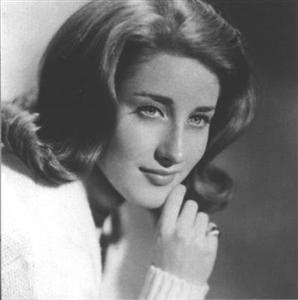

Let me explain. For many, Lesley Gore is a punchline, of course, merely typical of the manufactured teen sweethearts of the supposedly dead years in [white] American pop, the years between Elvis' induction into the United States Army and the Beatles' first appearance on the Ed Sullivan show. (You will note, of course, that those two presumed benchmarks stress the departure and arrival of male performers.) Gore's songs, we are told, are treacle, crying about parties and singing about lollipops and such.

But at least on the strength of its subject matter, I would defend "You Don't Own Me" as an important song for its historical moment. If we measure it against two other prominent 1963 releases featuring female vocals, well then, yes, "You Don't Own Me" may not be as bold a song as "Don't Make Me Over," Bacharach & David's valentine to Dionne Warwick's refusal to be remade for pop success, but it's no the Angels' "My Boyfriend's Back" either. How many other songs that year granted such a challenging and empowering voice to a seventeen year old girl? In this case, the song is more radical because the singer is a girl and not a woman: she's asserting her independence from boys even before she understands the importance of securing independence from men. And I would point out that she is doing so in the same year that Betty Friedan's The Feminist Mystique is first published.

Like most of Gore's best work, this track is produced by Quincy Jones. While it's not necessarily one of his most complex productions, the eerie tone he lends the verses grants a little more depth through shadow to the triumphant singalongs on the choruses. When Joan Jett covered the song almost twenty years later on her first album with the Blackhearts, she essentially duplicated this arrangement, transposing it from a pre-British Invasion pop orchestra to a post-garage band rock and roll outfit.

Why the analogy to James Baldwin, though? Well, the 1960s as they unfolded were not necessarily kind to James Baldwin, much in the way that they were not necessarily that kind to Lesley Gore. Baldwin's first novel, Go Tell It on the Mountain, was a critical and popular success in 1953, but his second novel, the exquisite Giovanni's Room, met with bewilderment in most quarters when it appeared in 1956. Why? Because Go Tell It on the Mountain was an autobiographical novel about the role of religion in African American life, while Giovanni's Room was about a doomed love affair in Paris--between two white men. From his first published story, Baldwin was classified as a "black" writer, and "black" writers are supposed to write about "black" subjects. As the 1950s gave way to the 1960s, as the Civil Rights era gave way to the moment of Black Power's ascendance, Baldwin also started to be rejected by a number of prominent African Americans. Some movement leaders questioned whether Baldwin was too "accomodationist," "white," or "effeminate" to represent black manhood to white America. To most such challenges, Baldwin's response had been that, like most of the novelists he respected and emulated, the only thing that he was trying to represent in his fiction was humanity.
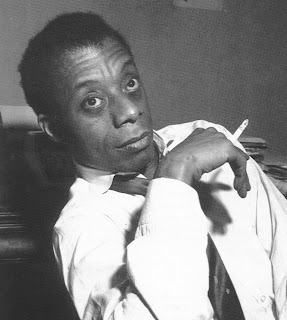
Still don't see the connection to Lesley Gore? Just wait a decade or two. During the 1980s, both Baldwin and Gore went through something of a renaissance, and it's not too much of a stretch to say that the sudden interest in both artists had to do with a much freer discussion within popular culture of same-sex relationships. For Lesley Gore was lesbian, as James Baldwin was gay, but a pop music star's sexual preferences had been even more closely guarded during the early 1960s than an esteemed novelist's would have been. But suddenly in the 1980s, when Gore's sexual preference was now more widely known, her songs were being covered on record by Joan Jett and she was being interviewed for Ms. by k d lang. No longer solely viewed as an embarrassing stereotypical throwback, she came to be seen by many as a trailblazing pioneer in female pop.

This reappreciation of Gore surely reached its apotheosis in Grace of My Heart, Alison Anders' wonderful 1996 fictional film about a woman songwriter in the 1960s and 1970s whose narrative journey through those years very closely follows the life story of Carole King. At one point, the film's protagonist (Ileana Douglas) and another songwriter of whom she may be jealous (Patsy Kensit) are forced to collaborate on a song for a squeaky clean early 60s teen pop star named Kelly Porter (Bridget Fonda). They're stuck for a subject, until they overhear the popstar having an argument with her girlfriend. They end up writing a song for Porter called "My Secret Love," which allows her to proudly but covertly pay tribute to the same lover that industry publicity demands she must hide from her adoring public.
Of course, Douglas and Kensit didn't really write "My Secret Love," but do you want to guess who did? That's right: Lesley Gore, in collaboration with, among others, David Baerwald of David + David. At the age of forty-five, she helped write the song that everyone now wished she had sung at seventeen, with a chorus that is an almost direct steal from "You Don't Own Me."

You may notice, though, that that's not the second song I've listed here. Instead, I've paired Gore's greatest single with a song she didn't sing on record, a single from Fame that most viewers of the film probably didn't connect with the pretty blonde from almost two decades before who sang "It's My Party" and did a guest shot on Batman. But Gore, who actually cowrote the lyrics for the song to her brother Michael's music, saw "Out Here on My Own" as a sequel to "You Don't Own Me" (which she didn't write) and frequently performed the two songs together as a medley during her comeback concerts of the 1980s.

It's easy to see why. If "You Don't Own Me" is a girl's wouldbe grownup declaration of independence, "Out Here on My Own" is a young woman's more knowing acknowledgement that, even if freedom is both real and vital, independence in its literal sense is pretty much impossible. Gore's lyrics may at first glance seem generic, but in a way that's part of their beauty. Within the movie, they comment on a romantic relationship, but they could just as well be part of a conversation between friends. This song isn't about sex, gay or straight. It's about the fact that, once you've worked hard to win the freedom of full adulthood, it's even harder to give up part of it to someone else. When you're raised to feel incomplete in and of yourself, to feel like an accessory, mature love and trust often feel like backsliding.

A bold cry for freedom, and the confusion of realizing that you can't do everything alone--with two songs, Lesley Gore bookends the initial triumph and continuing challenges posed by modern American feminism. But I'm not sure she'd ever get credit for it.

Virginia Slims Rap I (1966-1971): Strings and Women's Souls


204. RONETTES, "I Wish I Never Saw The Sunshine"
Produced by Phil Spector; written by Jeff Barry & Ellie Greenwich
Philles Records--Recorded in 1966; unreleased until 1991

205. CARLY SIMON, "That's The Way I've Always Heard It Should Be"
Produced by Jerry Brandt; written by Jacob Brackman & Carly Simon
Elektra 45724 1971 Billboard: # 10

How fast did second wave feminism take hold? In social terms, it may never have fully done so, at least not enough. In cultural terms, the reversal in just a few years was striking.

Take these two songs: both fairly sad; both co-written by a man and a woman; both still based in that post-Broadway/Leiber & Stoller belief that deeply felt emotion requires strings if not a full orchestra to attain full expression.

But the earlier song is clearly one that was given to the singer. It's a song for a girl, getting over a crush, even though Veronica Bennett (soon to be Ronnie Spector) was twenty-three when she recorded it. Many feel that this track contains her best vocal ever, but it is almost drowned out by all the instruments that Ronnie's soon-to-be husband feels he needs to pile on top of it. On a song like "Be My Baby" or "Baby I Love You, that had worked, but here it feels as if Ronnie is desperately trying to sing her way out of Phil's oppressive arrangement--or maybe I'm just reading their future marriage back into this earlier single. In any case, when this song resurfaced on Spector's 1991 Back to Mono set, many people were bowled over by it, most notably Beth Orton, who sang a beautifully stripped-down version of the song on her album Trailer Park four years later that put the narrator's emotions front and center. The revolution that made Orton's recording possible, though, began almost twenty-five years earlier, with 1970s artists like Carly Simon.

It's often forgotten now but when Simon first emerged on the scene, she was taken by many for a lightweight bimbo too--an upper-class bimbo even, too rich to be political and too pretty to be intelligent. Not yet attached to James Taylor, she was nevertheless often viewed in the shadow of her male collaborators, in this case Jacob Brackman, who cowrote several songs on the album.

Sheila Weller details the full story of how this particular song was written in her wonderful book Girls Like Us, but even without reading it, could anyone seriously think that a man had dreamed up this scenario? Particularly in 1971, when there were no Women's Studies courses on most college's campuses in which young men could have their consciousnesses raised? (I don't know: maybe he had a sister???)

This is the story of a young woman's fear of marriage and every word of it rings true and fatalistic. But my real point here, as usual, is to listen to the music as well as the words. Here the strings capture the bittersweet nature of the singer's emotion. By contrast, the strings on the Spector track are the idea of a man who thinks he knows what the woman he idealizes is thinking. In the earlier case, they drown out a woman's voice with male projection; in the later case, they amplify the woman's voice and make it loud enough to be heard. That's a revolution--forty five per minute actually--in just five years.

17 March 2009

Liar


687. NIRVANA, "Come As You Are"
Produced by Butch Vig; written by Kurt Cobain
DGC 19120 1992 Billboard: # 32

Actually, Kurt, you did have a gun. That was part of the problem.

15 March 2009

Actually, Mr. Lipton . . .


456, SOPHIE B. HAWKINS, "Damn I Wish I Was Your Lover"
Written by Sophie B. Hawkins; produced by Ralph Shuckett
Columbia 74164 1992 Billboard: # 5

457. KEYSHIA COLE ft/MISSY ELLIOTT & LIL KIM, "Let It Go"
Produced by Keyshia Cole, Ron Fair, and Manny Halley; written by Keyshia Cole, Missy Elliott, Kim Jones, Jack Knight, Canion Lamb, and James Mtume
Geffen 000997611 2007 Billboard: # 7

Okay, I have no idea what I want God to say when I get to the gates of Heaven, but if I ever do appear on a resurrected form of either Inside the Actor's Studio or Apostrophe, I am more than ready to declare my favorite curse word. It's damn.

Yes, my best friend would certainly hold a brief for "fuck," and Peter O'Toole's extended riff on the correct way to utter "sonofabitch" (not to mention its importance for modern cosmology) in the neglected sex-and-cloning comedy Creator is awfully compelling, but for me "damn" is the true aloha/shalom of the lot. Emphasize or extend any of the sounds and you communicate a slightly different meaning. Feeling cheated? Hit the D as hard as you can. Thunderstruck by a truly gobstopping aesthetic wonder? Stretch the A out and make it slightly nasal. I could go on and on, but I'm sure grasp the point: damn is the utility expletive.

Here I just pluck out two handy instances: a white one and a black one, as it turns out. Sophie B. is mad as hell but knows she's in a losing fight, while Missy (no disrespect, but did anyone buy the single for Keyshia?) dispenses with the nominal topic of the song and advises us to just surrender to the groove. In both cases, in order to truly communicate, all the singers had to do was kick out the damns.

"Shoot" I have no respect for, but "dang" I'll get to further on up the road.

The Subtle, the Blatant, and the Purple

762. CHARLENE, "I've Never Been To Me"
Written by Ken Hirsch & Ron Miller
Prodigal 0636 1977 Billboard: # 97
Motown 1611 1982 Billboard: # 3

763. REBA MCENTIRE, "Fancy"
Produced by; Tony Brown written by Bobbie Gentry
MCA 54042 1991 Did not make pop charts

Like a lot of people I know, I first started paying attention to Barack Obama after his speech at the 2004 Democratic National Convention. It wasn't just that he was a great public speaker. It was that, unlike the speeches of so many politicians who tried to inspire me, the moving words Obama spoke actually seemed to describe the country that I thought I lived in. We worship a mighty God in the Blue States, he told the partisan faithful at the convention, and we don't like the government poking into our libraries in the Red States. Even back then, that was the America I knew: conservatives in Massachusetts and liberals in Missouri, not one America ("the real America") or two (Red and Blue), but a dizzying number of semi-interlocking subgroups. It was beyond ethnicity or even ideology. It only seemed to simplify around election time, when the press-politician feedback loop made sure that all those many groups were reduced to just two, two easy actants that even the most casual audience member could follow.


Once can make facile analogies to McCarthyism, to Henry Ford's war on New York City, even to the bimetallist Populists of the 1890s, who saw England and the Eastern United States in cahoots to rob the West blind. But the electoral map of red and blue that seemed so clear throughout the 1980s, 1990s, and 2000s really goes back to 1968, to George Wallace, Richard Nixon, and (especially) Roger Ailes, who figured out a way to break up the loose coalition that had helped Democrats win the Presidency in all but two elections over almost four decades. The rise of cultural conservatism in post-Nixon Republicanism only made this tie stronger. By 1980, battle lines were drawn, and every American needed to decide which side of the internecine barricades s/he was on.

Charlene's "I've Never Been to Me" is a fascinating artifact of that cultural transformation. The single barely made the Billboard Hot 100 in 1977, when it was first released (the year before the Moral Majority was founded). Yet it rose all the way to # 3 when it was re-released five years later, after influential d.j. Scott Shannon had taken to playing it repeatedly on his show. In terms of production, it is obviously a 1970s song, so why did it have to be rereleased in the early 1980s to be popular? Reaganism, obviously: just say no; antisex conservatism. Case closed.

Maybe.

"I've Never Been to Me" is musically obvious throughout and lyrically clunky at points, nowhere more so than in the spoken word section toward the end. Admittedly, spoken word in the midst of a sung performance is very hard to pull off on record, as even an established pro like Kenny Rogers could tell you (cf. 1979's "Coward of the County"). There are some cute stretches in this lyric, though, particularly in the internal rhymes in many of the verses, which double the words' impact but must have been hell on Hirsch & Miller's copy of Clement Wood. As anyone who has attempted this song at karaoke can probably tell you, "I moved like Harlow/Through Monte Carlo/And showed 'em what I've got" flows particularly well. Those words can be as much fun to sing on top of those notes as the events they describe were supposed to have been for the narrator back in the day.

And then there's the one internal rhyme that really drives the song home, a better conveyor of its would-be message than the clunky reference to "unborn children" a few lines earlier: "I've spent my life exploring/The subtle whoring/That costs too much to be free." Vulgarity is much more common in pop now than it was thirty years ago. If you weren't around back then, you can't really appreciate the impact of the word "whoring" in a song that otherwise sounded so inoffensive and gentle. It's almost the reverse of Joey Ramone singing that he wants to be your boyfriend over dissonant punk guitars. In any case, the first time you heard those three lines, it hit you like a sledgehammer.

Okay, so there's a little bit of craft in the songwriting. It's still part of a conservative plot to brainwash women, right? The real author of the song has to be Phyllis Schlafly. To which I say, have you seen Priscilla, Queen of the Desert? A lipsynched performance of this song by drag queens opens the movie. Yes, yes, I know, "camp"--as if slapping that one word on a cultural artifact allows us to avoid all further critical thought. For the entirety of the movie, though, this song almost functions as a sort of thesis statement, emphasizing the way in which one can be oversated with sensation. In truth, what fails about the song, even in Charlene's rendition, is not its delineation of the narrator's problem, but rather the solutions that it offers to it. We don't know how much of a jerk the husband of the woman she's talking to really is, or how much of a strain it is to raise her bratty children. But that still doesn't mean that the narrator's weltschmertz isn't very real.

Indeed, one of the reasons why this song might work better as a drag number is that a man can identify with its narrator without politically letting down his gender. (Rearrange that last clause any way you like--I assure you each meaning is intended.) This isn't a song about turning back from feminism to femininity but rather one about growing weary of compulsive sensation and consumption, a feeling that was certainly very apt in the early 1980s. And if that is a wholly "conservative" emotion, then Charles Baudelaire was a pioneer of Reaganism. Just take another look at his address to his "hypocrite lecteur" at the beginning of Les Fleurs des Mal.

Alright, I hear you say, but you're stretching the point: any anticonsumption weariness in the early 1980s was sucked up by the rising tide of cultural conservatism and then walked in lockstep with the platforms of the Republican Party, which promoted even higher levels of consumption than almost any other organization in our society. I admit you may have a point there, one captured in the ideological contradictions embodied in the antiselfishness/procapitalism acceptance speech that Bob Dole gave at the 1996 Republican Convention. Charlene's single, you could claim, succeeded because it was coopted on the occasion of its re-release and only its antifeminist message remained. As Chuck D most assuredly didn't say, Red States win again.

Which brings me to 1991's "Fancy." This isn't a rereleased single, but rather a rerecorded one. Bobbie Gentry wrote this song back in the late 1960s, but Gentry's arrangement of it almost makes the song come off as a smarmy dirty joke. This is not quite the right approach for a story about an impoverished girl whose mother "turns her out," as the lyric bluntly puts it, pushing her into a life of prostitution. Gentry's original rendition features kicky horns (once again, the continuing curse of Herb Alpert), but while horns may have worked on Dusty Springfield's "Son of a Preacher Man," they don't work there. Neither does Gentry's vocal, which is too distanced to convey the song's true roach-populated horror.
Logically, Gentry's rendition should be the more feminist version of the song--she's in the thick of the 1960s and crosses over more to rock. Reba McEntire, by contrast, is firmly in the Country camp. After Reagan, Tennessee is as Red a State as you can get.

Nevertheless, McEntire's version of "Fancy" is a revelation, beginning with the electric guitar that rightfully replace's Gentry's popping horns. There's also no distance to McEntire's vocal, which is both tortured and sly in turns, and both at exactly the right places: screaming for momma on one verse and taking the pathetic rich johns in stride on the next. In McEntire's hands, this is an unabashed song about the worst kind of female empowerment, one that balances the agency that its narrator gains with the heavy price that she had to pay for it.

Could you construct an argument that this record is conservative rather than liberal? Sure, if it's really that much more important to you whether you live in New York or Indiana. But whether you're Red or Blue, this is a song about the world of poor, uneducated women, the ways in which they may attempt to form cross-generational ties, and the ways in which they are commodified by a male-dominated world.

Because, my fellow citizens, there is no Red America, and no Blue America. We can grow sated with our consumption, our amusement, our pleasures in the Blue States; and we can feel righteous anger at the way rich men exploit both women and the poor in the Red ones. E pluribus popu[lu]m!

11 March 2009

Swanky


781. LUPE FIASCO, "Kick Push"
Produced and written by Lupe Fiasco and Soundtrakk
Atlantic 0243 2006 Did not make pop charts

Not only a great smooth rap; not only a fairly egalitarian, non misogynistic depiction of a male-female relationship in hiphop; but quite simply the greatest song ever written about the education of an avid skateboarder. Damn.

09 March 2009

What They Were Really Born to Sing

248. U2, "Hallelujah Here She Comes"
Written by U2: produced by JImmy Iovine
Island 99250 1988 Billboard: # 3 (as B-side of "Desire")

I made that comment some posts back about fun early U2 B-sides, and their new album just came out and it's even duller than the last one (no "Vertigo"), so I think it's time to briefly take note of this song, which isn't even available on Rhapsody so I can't give you a link off the title. "Hallelujah, Here She Comes" is one of several dozen songs that U2 recorded during the Rattle & Hum period. More than any other of the band's projects, the process of selection on this one was fascinating. Some performances ended up in the film, some ended up on the album, some ended up as B-sides, and some have only shown up on bootlegs, and I'm by no means the only person who would have shuffled the available tracks in their places around had he gotten the chance. During this period, in the wake of the enormous global success of The Joshua Tree, U2 self-consciously embraced American music--and when you say "self-conscious" in relation to Bono, you're obviously talking really self-conscious. They recorded a song with B. B. King in Sun Studios; they sang a song about hearing Billie Holiday on the radio in Harlem; they had Bob Dylan play organ on a track whose lyrics were almost incomprehensible (even though it had been neophyte Al Kooper who had famously played organ on "Like a Rolling Stone").

Predictably, the best songs for the project were the less self-conscious ones. The ElvisQuoteaRama "A Room at the Heartbreak Hotel" in particular is a sad little mishmosh, just begging to be matched to footage from Jim Jarmusch's Mystery Train a few years later to make a true YouTube classic. By contrast, "All I Want Is You," which seems to have no clear musical referent, is probably one of the band's best ballads, right down to Bono's last-minute entry in the Roger Daltrey/Bruce Springsteen Sustained Classic Rock Scream Sweepstakes.

"Hallelujah Here She Comes" isn't that classic, but it's a lovely little gem just the same. "Desire," the A-side of this single, is a good song, but it's as clear a Bo Diddley homage as Springsteen's "She's the One." The beat on this song, however, is all its own, propulsive, vaguely cowboyish, but really just Larry and Adam laying down a beat for their mate Paul Hewson to goof around on. Not only does it have an unpompous call-and-response on the Hallelujahs, but the simple lyrics here are less portentously witty than many of Bono's. "I see you're dressed in black/I guess I'm not coming back" is no "How long/Will we sing this song," but it's certainly worth repeating.

Never Trust a Hustler


520. STEPHEN STILLS, "Love The One You're With"
Produced by Bill Halverson & Stephen Stills; written by Stephen Stills
Atlantic 2778 1970 Billboard: # 14

521. RYAN ADAMS, "New York, New York"
Produced by Ethan Johns; written by Ryan Adams
Mercury 177242 2002 Did not make pop charts

You're probably tired of hearing me say this by now, but so often it's the music--and, more than anything, the arrangement--that tells the real story of a single. Lyrics are just text, but music is subtext.

Take these two songs. Lyrically, they're very distinct. Both sum up eras: California in the Age of Free Love; NYC just before 9/11. Stills' song, along with Jackson Browne's collaboration with Glenn Frey on "Take It Easy" the following year, is the ultimate expression of the (male) ethos of free love. Supposedly, Stills heard Billy Preston utter the phrase at a party and took it from there. Adams, by contrast, is singing about his struggling days as a musician in Alphabet City during the 1990s. Prominently featured on his first album with a major label, this song is very much his self-conscious farewell to his starving artist days. The fact that the title character of the song gathered a great deal of symbolic resonance between the time Adams recorded it and when it was released, however, made audiences hear it in a very different way.

The thing is, though, for all their lyrical differences, musically, these two tracks are amazingly similar. Yes, Stills has more star power (Crosby, Nash, Rita Coolidge, and Mama Cass on backing vocals, maybe Booker T on organ--on his side, Adams may have had Adam Duritz on backing vocals). Yes, there are slight instrumental differences (the reeds at the end of Adams' track, the amazing turn by Stills on steel drums on his).

But listen. Basically--and I am using that word almost in its literal sense here--both tracks are the same rhythm section and organ layered on top of that same acoustic guitar with the same strumming pattern.

Why? Because it's the same song: a hustler justifies his abandonment of one object of desire for another. In one case, it's a woman; in the other, it's a cultural center. In both cases, these singer-songwriters are making sure the music moves fast enough that the listener won't catch up with their lapses in logic. Musically and personally, they feel, it's simply time to move on.

Was Adams thinking of Stills' song when he recorded his? Maybe. He probably knows the song at least. All I know is, whenever I hear that chord progression played in that specific strumming pattern, I think of the one time that Stills' song hit me hardest: on a subway platform in Boston with my college roommate as he waited for a train to take him to the airport to pick up his hometown girlfriend whom he hadn't yet told about his college girlfriend. We had been talking, but when he realized the exact song that the busker was playing, he broke out in embarrassed laughter. Neither of us said a word about it, but both of us knew that he had been busted: the gods had decided to throw down a song cue.

So yeah, songs like those, I don't care about the words. Those chords in that strumming pattern? For me, that is the exact accompaniment of erotic rationalization.

08 March 2009

The One That Got Away

835. PLASTIC BERTRAND, "Jacques Cousteau"
Written by Phillippe Claes, Lillo Nicosia, and Plastic Bertrand
1980 Did not make pop charts

Okay, this is one of the ones for which I can't give you a link. You just have to trust me.

For at least fifteen years, I though I had hallucinated this song. I heard it once at a Halloween party at the Graduate School of Design when I was in college and--with one huge exception, which I'll get to later--I pretty much retained it whole ever since.

Admittedly, it's not a hard song to retain. The guitar is undisguised Chuck Berry, and the bass player and drummer seem to be on autopilot. Musically, it's the kind of a song that one almost receives in a pre-heard state. But the vocal is wonderfully childish, and the lyric is a great goofy bounce. By the time I heard it, the assumption was that a song wasn't Punk if you didn't offend someone, so a song as inoffensive as this would have gotten rather automatically classified as New Wave.

Flash forward to the late 90s when I was going Kazaa crazy, just plugging in every song I could think of and seeing if I could get a hit. Tried this one on a lark, found it right away. Same chords, same bassdrop vocals, same Chuck Berry guitar . . .

But I didn't remember it being in French. I had a whole set of English lyrics in my head: Jacques Jacques Jacques Cousteau, How low can you go? etc.

Neither the sound system in the GSD that night nor my French was good enough for me to have heard the lyrics in enough detail to translate them on the spot. Also it was late, I was um distracted, etc. Were all the Eurotrash and Fashionable Ones around me singing along in their own spontaneous translation that night so that's what I remembered? Maybe, but not likely--the fact that the song was in French would have made it cooler for them.

Which leaves me leaning toward one last possible explanation: there was an Anglophone cover of the song out by that point and that was the song I heard. That means there's another single out there that I still have to find . . .

20 February 2009

The Melkweg's Finest


365. GOLDEN EARRING, "Radar Love"
Produced by Golden Earring; written by George Kooymans and Barry Hay
Track/MCA 40202 1974 Billboard: # 13

366. GOLDEN EARRING, "Twilight Zone"
Produced by Golden Earring; written by George Kooymans
21 Records 103 1982 Billboard: # 10

A quick one about Golden Earring--my favorite Dutch rock band!

Actually, Golden Earring is the only Dutch rock band I know, but I am honestly a fan of both these songs.

The former song is still ubiquitous on classic rock stations and shows up repeatedly in polls as one of the greatest driving songs of all time. When it comes to gearshifting, it's no "Call Me," but it certainly leaves the overhyped "Free Ride," for example, in the dust. In the immortals words of Stan Lee, nuff said.

As for "Twilight Zone," it's part of that great unappreciated genre of late Cold War pop spy thrillers, which I hope to do a post on at some later date. If you lived through early MTV, you probably have the visuals for the video of this song seared into your brain, but I for one am rather pleased that I can listen to it now without automatically thinking of pre-Robert Palmer trenchcoated supermodel types. It's a great little gnarled thriller--but it should have been called "When the Bullet Hits the Bone," since that's the phrase I always come away chanting after each time that I hear it.

In both cases, though, what really stays with me is the perfect snarl of group founder George Kooymans. Has there ever been a European pop star who sounded so unquestionably American? It's that primordial stew of global pop again, making America European and Europeans American. Hearing him howl for Brenda Lee or archly note that "It's 3 a.m, the gun is still warm," I find it hard to believe Kooymans actually grew up in the Netherlands.

He did, of course, but like every other postwar kid in Western Europe, he apparently sucked up every facet of American culture he could. And anyway, Americans don't snarl like that in real life, just in the movies and on pop records.

Git Down, Eeyore, Get Funky


172. SMITHS, "Heaven Knows I'm Miserable Now"
Produced by John Porter; written by Johnny Marr & Morrissey
Rough Trade 156 1984 Did not make pop charts

Not my favorite Smiths single, but almost certainly their epitome (and how cool is it, by the way, to come up with the title this early that sums up most of your work). The singly named Morrissey bitches and moans as Johnny Marr--whose very name echoes a phrase of French derision--jangles along in the background. Twelve years later, the Cardigans would actually chart with an almost direct instrumental ripoff of this single on "Lovefool," but the genius here, of course, is that that bouncy music is under these misanthropic words.

If the increasing trend toward self-conscious "loser" singles during the 1980s and 1990s allowed slackers to indulge and feel superior at one and the same time, Brit pop like this allowed alienated would-be intellectuals on both sides of the Atlantic to do the same thing: yes that's exactly how it is--but I'm not that whiny, just clever.

Moreover, "Caligula would have blushed" as a throwaway is genius, particularly the way Morrissey's voice goes all trilly and such when he sings it.

Yes, Son, There Was a Time When We Weren't Ironic


836. VILLAGE PEOPLE, "In The Navy"
Produced by; written by
Casablanca 973 1979 Billboard: # 3

College students and intellectuals--is there really any difference?--are always ironic, but American culture wasn't really reflexively ironic until the 1980s at the earliest. I'm tempted to date the turning point as the beginning of Late Night with David Letterman. One thing I know for sure is that it didn't begin with Bob Hope.

Most people under the age of thirty don't remember this, but if you grew up in the 1960s and 1970s, television was regularly punctuated by variety specials hosted by, among others, Bing Crosby and Bob Hope. As one worked through childhood and adolescence, one of the fun things about watching these specials was seeing how those two showbiz veterans tried to stay "current." One can only repurpose Kathryn Crosby and Martha Raye so many times. I remember being as riveted by Der Bingle's duet with David Bowie on his last Christmas special as a teenager as I am to this day. But then again, there was the time Ol' Skinose tried to incorporate the Village People into his act.

It was pure 1940s radio: there's a new single to promote, and the established host works the act in question into his variety show. The only thing was the act in question was the Village People, and this particular Hope show was filmed live on an active-duty US Navy aircraft carrier. On the one hand, it was perfect; on the other hand, it was a built-in collision.

This is another one of those cases where I haven't had the guts to hunt up the inevitable YouTube clip. As a teenager, I remember the seamen in the audience being stonefaced, even menacing, as the VP went into their act. Odds are, there were probably a number of closet cases among them, but many were probably plain old het homophobes. The thing was, the guys in that audience (who were probably almost exactly my age, come to think of it) got the joke that Bob Hope didn't. They knew the song was saying they were all gay, whether they admitted it or not; Hope thought it was a bouncy little tune with a nautical theme, even though he had been playing "swish" for laughs for decades by that point. He was listening to the choruses; they were noting the release.

Okay, I may be overemphasizing this particular instance. A few years later, "Born in the USA" would be read in the same exactly opposite way. Even as recently as ten years back, the real YMCA was using the Village People's homocelebratory song about it to promote its clubs. Still, even as soon as ten years later, I'm not sure that something so unknowing would have happened.

19 January 2009

The Workmen and Their Tools


0959. THE ENEMY, “You’re Not Alone”
Written by the Enemy ; produced by Owen Morris & Matt Terry
WEA/Warner 2007 Did not make pop charts

Even back in the old record store days of LPs, I was always fascinated by how music was sorted. Then and now, a lot of stores just threw up their hands and dumped 75% of the stock into something they called Rock/Pop. However, as music has been more and more anatomized and balkanized over the last three decades, subdivision increasingly prevails.

Witness the classification of this song. If you don't just find it classified as "Rock," it is often specified as "Punk" or even "Aggro," the latter even the title of another single by the same band. Musically, though, this is not really punk--well, I guess it is if you file your old Sham 69 singles under that categor. I, on the other hand, have always considered them more Power Poppy--check out the power chords--okay, let's compromise it and call it Power Pop with chanting.

If I had to classify this song solely by its lyrics, however, it would be simple: it's a protest song. What's that you say? Protest songs are played on acoustic guitars and underproduced with about half the energy of this so that they remain "real"? Not where I come from. Even back in my twenties, my two favorite protest songs were "Free Nelson Mandela" and "Sun City," and those are both high energy, mightily produced songs. And how about "By the Time I Get to Arizona"? That was a song that lit the fuse to an existing protest movement that actually ended up succeeding.

All these songs are written in what musicologist Benjamin Filene has wonderfully called "the musical vernacular"--simply put, the music people live and breathe in on a daily basis. Since World War II, that has frequently meant some form of pop. And when the factories began closing in Coventry in 2007, the Enemy didn't even think about what kind of music they should set their angry words to. Like any real bards of the people, they used what they had lying around, up to and including the brilliant inverted steal of "Don't let the sun go down on our empire" for the lyric.

"You're Not Alone" is the first and (so far) the most brilliant protest song of the Second Great Depression. I hope it will be performed at least as long as "This Land Is Your Land" is.

12 January 2009

Mood Music


740. KAISER CHIEFS, "I Predict A Riot"
Written by Nick Baines, Nick Hodgson, Simon Rix, Andrew White, Ricky Wilson
B-Unique 088 2005 Did not make pop charts

90% of pop music proceeds by generic musical cues; 95% of good pop music plays with those cues to liven up the experience.

As usual with me, let's dispose of the words first: yes, these people think a riot would be a good thing.

The fun part, though, is the expectations that the arrangement sets up. Not only those opening guitars but that organ is as "scary" as the first verse promises. Then the chorus kicks in, and here we are among bracing power chords and all those la la las. Suddenly, a riot doesn't seem like all that bad an idea. Seriously, people, where do you want to "be"?

Simple, but effective.

Beta Testing


154. BOBBY WOMACK & PEACE, "Across 110th Street"
Written by J. J. Johnson & Bobby Womack
United Artists 196 1973 Billboard # 56

The release of Watchmen is reminding me about the pros and cons of soundtrack sampling--not just featuring music on a soundtrack, but using music on a soundtrack that's already been recorded for a different purpose.

Seriously, I don't mean to scapegoat Watchmen. (Not yet. I haven't seen it yet. I've only heard similarly comic-versed friends see it and shriek in horror.) But I have listened to the soundtrack album, which struck me as fairly unimaginative. Each song, as in "Forrest Gump," simply cues the audience via nostalgic association for a specific reaction to a scene.

If you're going to reuse music that's been recorded elsewhere and do it right, it needs to provide counterpoint, not double the melody. The most famous US pop example of this may be Martin Scorsese's use of "Layla" over the montage of mafia hits in Goodfellas. "But it's an elegy," the director disingenuously insisted. Still, you have to admit that playing an elegy for lost love over a sequence of dead bodies of criminals provides an interesting disjunction.

Which brings us, finally, to "Across 110th Street." To begin with, it's as beautiful a title song as blaxploitation cinema produced in the 1970s, so much so that I'm surprised that Marsh missed it in his original accounting of the period. But what brings me to address it here is Quentin Tarantino's reuse of the song in Jackie Brown (1997).

Yes, the film is an homage to blaxploitation cinema, right down to the casting of Pam Grier, the queen of blaxploitation, as the title character. The truth is, though, that Tarantino has never gotten credit for this, this best film, even down to the genius of this specific repurposing of a song.

Yes, this song was played over the credits of another film, almost a quarter of a century before--but the passage of time is very much the point here. The "day-to-day fight" Womack sings of has been going on for Grier's character for almost 25 years, and it shows. That magnifies the song, makes it bigger, extends its implications. Reusing the song in this specific case doesn't just tie the film to earlier blaxpolitation films. It legitimately asks what would have happened to the characters who had the wits to survive those earlier works. Okay, they survived that environment. Would they have thrived? By taking it down to the middle ages of the characters, the song isn't just reified--it's complicated.

10 January 2009

A Master Class in Signifyin'

99. JAY-Z, "99 Problems"
Produced by Jay-Z & Kareem "Biggs" Burke; written by Shawn Carter, N.Landsberg, Felix Pappalardi, Rick Rubin, Billy Squier, J. Ventura, & L. Weinstein
Def Jam 000248411 2004 Billboard: # 30

Just after this single came out, a friend of mine was scheduled to speak at a conference on Black Masculinity in the Twenty-First Century. I suggested he and the other participants spend the conference taking apart this song.

Let me roll things back a bit to put this in perspective. In 1931, Louis Armstrong recorded "Shine," a song that lists nearly all of the qualities that are supposed to identify the stock Negro of early twentieth century culture. No one would deny that the song itself is deeply racist, a late survival of the worst minstrel show tendencies. The argument comes over what to make of Armstrong's interpretation of the song. Some--especially those who have seen the 1932 film A Rhapsody in Black and Blue, in which Armstrong performs the song in a leopard skin--would argue that his recording perpetuates the worst traits of racism, that one of jazz's great revolutionaries had by 1931 become no more than an Uncle Tom, allowing himself to be seen exactly as racist whites wanted to see him. For me, though, Dooley Wilson's version of the song in Casablanca is much more stereotypical. Wilson may be wearing a suit rather than a leopard skin as he sings it, but his eyes roll all the while, he hangs on the audience's reaction, and his vocal attack on the lyrics wouldn't have been out of character for such turn of the century minstrel legends as Arthur Collins or Byron Harlan.

By contrast, if you open your ears, what Armstrong does with the song is much more radical. He does more than simply "scat" the lyrics--he deconstructs them into smithereens. His vocal and improvisatory skill is so manifest, and the sounds are so chopped up into fragments, that the lyrics almost don't seem to exist anymore. He doesn't inhabit a racist song and allow it to endure. He stomps it into submission until we'll never be able to take the "real" words seriously again.

Jay-Z's performance on "99 Problems" is much the same trick, but it's more a matter of semantics than phonics. He takes one word that he, like many 1990s rappers, has rightfully been accused of overusing and rings a series of changes on it. The word, of course, is bitch, and if you don't think HOVA ever used it too casually, listen to 1998's "Can I Get a ---?" again (even though that track does technically give women equal time to complain about their worthless men).

Here, though, that noxious word gives rise to a masterpiece of the genre. Listening to Jay-Z on this record, from his supposed "farewell" album, I think he's not only read the complaints about his language, he's read the conference papers and dissertations about him too. He turns the word on its head, implicitly acknowledging that the concerns that dominate most rap lyrics are relatively trivial. The icing on the cake, of course, is when he takes a verse to brilliantly relate a far-too-typical DWB pullover and ends the cop's spiel with the line We'll just see how you feel when the canines come, taking bitch back in the ensuing chorus to its literal meaning. The drop to the downbeat between that verse and chorus may be my favorite hiphop moment ever.

09 January 2009

Talking Vernacular Blues


876. GLENN FREY, "Smuggler's Blues"
Produced by Barry Beckett, Allan Blazek, & Glenn Frey; written by Glenn Frey & Jack Tempchin
MCA 53546 1985 Billboard: # 12

877. JOHNNY CASH, "Singing In Viet Nam Talking Blues"
Written by Johnny Cash
Columbia 45393 1971 Did not make pop charts

Oh Lord, he's talking Miami Vice again.

But seriously folks . . .

There's a traditional form in twentieth-century folk music called the "talking blues." The talking blues is not a "protest song" per se. It's more like a broadside, a song of indeterminate length in which words about recent events are more accompanied than set to music. The point of talking blues is to pass along information to the listeners, be it about the sinking of the Titanic, a strike at a shoe factory, or a day trip to Bear Mountain. Diehard folkies would probably suggest that there can't be such a thing as a pop talking blues, because the presumed slickness of pop would have to distract by definition from the self-conscious information drop of the words. Nevertheless, when Chuck D famously referred to rap "the CNN of black America," he as good as suggested that in the closing decades of the twentieth century, the talking blues had migrated into pop, into the undeniably polished tracks of contemporary hiphop.

But what about white Americans? One could argue that they don't need a muscial CNN because they already have the 24-hour news version, but no American above the age of eight would seriously suggest that what comes out of the mainstream news organizations is what we seriously need to know. Certainly in the pre-internet, not-yet-really-cable-ready 1980s, it wasn't. This is why, to complete their instruction about Reagan-era diplomacy in the Western hemisphere, many mainstream Americans needed . . . Miami Vice. The series was not just "anti-authority," as so many pieces of post-Vietnam American culture were. Episode after episode of the show, right down to the series finale, were premised in the idea that, no matter what the President might say, the War on Drugs would always suffer because its true success would undermine the supposed cause of fighting anti-communism.

In no case was this more true than in the episode entitled "Smuggler's Blues." Glenn Frey, who also appeared as an actor in the episode playing a shady pilot, even wrote this song for it, and its verses punctuated the narrative transitions from location to location. The song isn't exactly a summary of the episode's actual plot, but it does borrows amply from it, right down to the punchline "It's the politics of contraband," which is uttered near the end of the episode by Don Johnson as the frequently sockless Sonny Crockett.

As in most talking blues, the music here is instantly forgettable. The words are the point, and even they contain no self-conscious flourishes that might draw attention away from the data they wish to impart. We are taken through a drug deal from start to finish but we are asked to see it in organizational terms. For a Reagan-era pop troubadour, drugs are not just recreation or a scourge on society. They're part of our foreign policy strategy for winning the Cold War. As Jackson Browne almost acknowledged when he rewrote "Cocaine" at a Christic Institute concert a few years later, this was the politically self-aware drug song that that more-respected singer-songwriter wished he had written.

Johnny Cash's "Singing in Viet Nam Talking Blues" is a more respected song than Frey's and a more obvious heir of the classic talking blues tradition so I won't belabor my analysis of it. But I would point out that Cash almost does the opposite in this song of what Frey would do in his song fourteen years later. Frey took something considered personal and recreational and connected to global politics, whereas Cash takes the most pressing geopolitical issue of his time and takes it down to the level of the personal. From the opening scene at the breakfast table, this is a song about a married couple who go on a trip. The purposefully understated, even labored folksiness of it is meant to disarm the listener. It reduces our trip through the war zone to a human level, which in turn makes the rain of shells even scarier. This is not the world of either Barry Sadler's or John Wayne's Green Berets. This is a scary environment in which the politics of the war seem ultimately irrelevant.

By the end Cash could shout, as almost no other country singer of his time could or would shout, for the "boys" to be brought home "IN PEACE!" and no one could mistake him for being pro-communist. Like Frey, he wasn't just preaching to a left-leaning proudly folkie choir. He was using the musical vernacular of his time, and spreading the news to a mediated crowd.

08 January 2009

*Definitely* Not a Dweeb


165. THE OFFSPRING, "Self Esteem"
Produced by Thom Wilson; written by the Offspring
Golf 001 1994 Billboard: # 45

Yet another chapter in the continuing saga of loser protagonists in postmodern pop. I am particularly fond of this one, though, since it skewers in its oft-repeated title one of the most counterproductive post-hippie sociological concepts that the Donnie Darko generation had shoved down their throats while growing up.

As usual in Loser Pop, the listening experience is based in a double-edged irony. The (presumptively male) listener is supposed to identify with the narrator and feel superior to him at the same time. Unlike Beck's "Loser" et al, however, this lyric has a progression and a payoff. When the narrator gets to that last "little bit," we begin to realize that he may not be quite as dumb as we thought. Even if he's still far from boyfriend material.

06 January 2009

The Way It Happened Was Like This, See . . .

545. C. W. MCCALL, "Wolf Creek Pass"
Produced by ; written by Chip Davis and Bill Fries
MGM 14764 1975 Billboard: # 40

For once, I won't belabor it: a yarn pure and simple, spun by William Fries, advertising man, who reinvented himself as the hyperhomespun "C.W. McCall" for a series of ads for the Mertz Bread Company. "Convoy" is better known, it even spawned a film with Ernest Borgnine and J.J. Walker, but I've always preferred this song, with words that twist and turn like that downbound road that the narrator travels. Like many great country and hiphop songs, this one is firmly in the epic rather than the lyric mode, but there is much to savor along the path of this particular mock-heroic journey--particularly, for me, the telephone pole math.

A few years later, Harry Chapin wrote a song ("20,000 Pounds of Bananas") that ripped off both this and David Allen Coe's "You Never Even Call Me by My Name," but slumming in country is never the same thing as living in country--or in Country, to be more precise.